Tree Removal · Washington County
Tree Removal in St. George, UT
As of August 2026, removing a medium (30–60 ft) tree in St. George, UT typically costs $500 – $1,250 — small trees start around $250, and large or high-difficulty removals run $1,300 – $2,800. St. George Tree Care connects you with an independent local provider for an exact quote, usually the same day.
When a Tree Actually Needs to Come Down
Removal is the last resort, not the first — a good provider will tell you when a trim solves the problem for a third of the price. But some situations in this valley genuinely call for removal:
- The tree is dead or mostly dead. In our heat, a dead tree dries fast and becomes brittle within a season or two. The longer it stands, the more dangerous — and often more expensive — the removal gets.
- Storm damage split the structure. Monsoon microbursts routinely tear codominant trunks apart — globe willows and fruitless mulberries are the usual casualties. A tree that's lost half its crown or has a vertical split in the trunk usually can't be saved.
- Roots are heaving hardscape or invading lines. Fast-growing shade trees planted a few feet from a foundation, pool deck, or sewer lateral in the 1990s and 2000s are now lifting concrete across St. George's older neighborhoods.
- It's a tamarisk (salt cedar). This invasive drinks enormous amounts of water, resprouts from stumps, and crowds out everything else. Removal plus stump treatment is the standard fix along the Virgin River corridor.
- Wrong tree, wrong place. A Mexican fan palm under a power line or a cottonwood over a pool was always going to become a problem — sometimes the honest answer is removal and a better-suited replacement.
Not sure which side your tree is on? Describe it in the quote form — an independent local provider can look at it and tell you whether removal or a structural trim is the right call.
What a Professional Removal Involves
Understanding the process helps you compare quotes intelligently — the price differences between bids usually trace to one of these steps being handled differently:
- Site assessment. Drop zone, obstacles, utility clearances, equipment access. A backyard tree behind a block wall with a 36-inch gate is a fundamentally different job than the same tree in an open front yard.
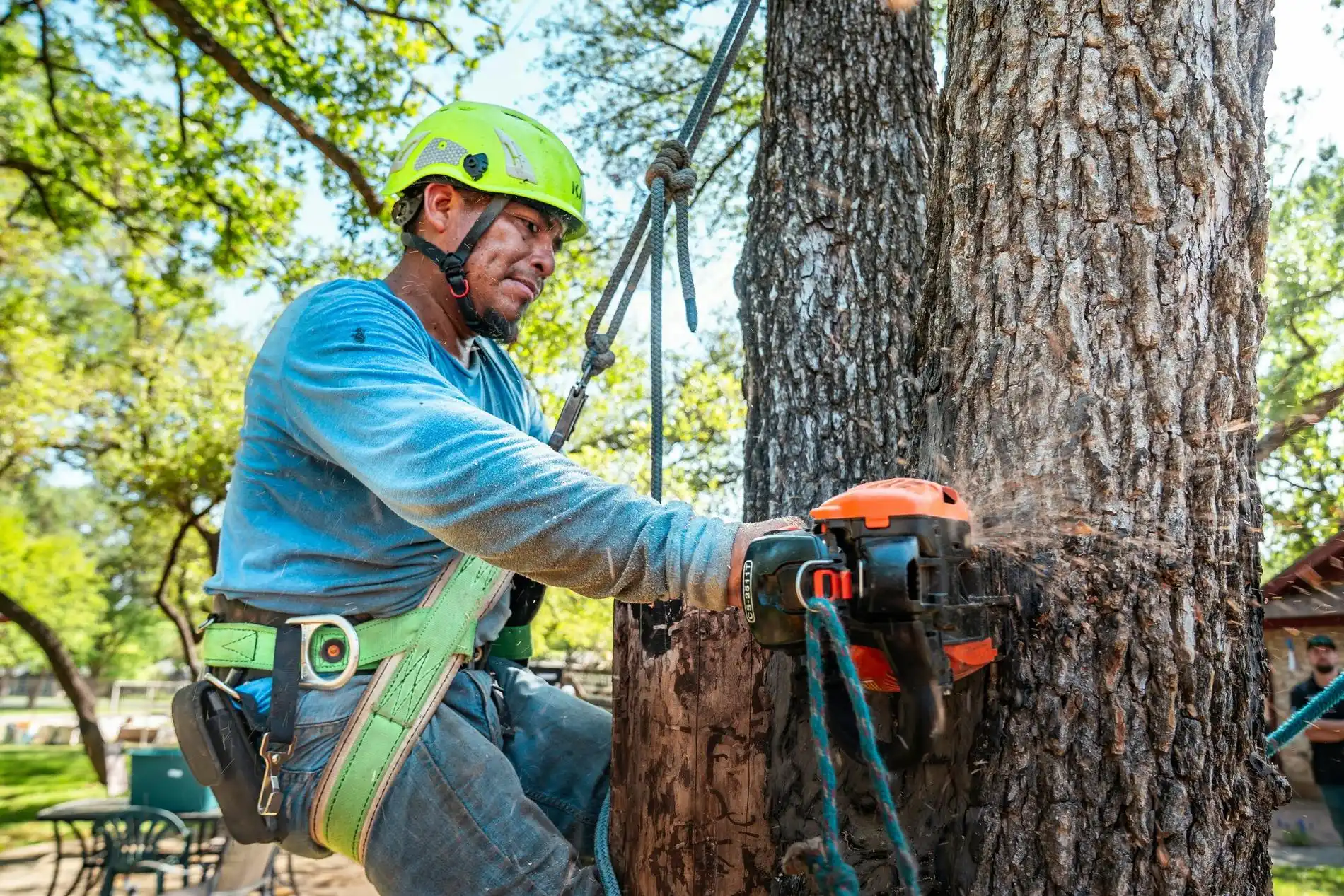
- Rigging or felling. Open space means the tree can be felled in one piece. Near structures, a climber (or bucket truck) takes it down in sections, roping each limb to the ground. This is where tree height and obstacles drive cost.
- Bucking and chipping. Limbs go through the chipper; the trunk is cut into movable sections.
- Cleanup and haul-off. Standard bids include hauling brush and wood; confirm whether raking and blowing the area is included.
- Stump grinding (separate). Almost always a separate line item — the stump grinding page covers per-stump and per-inch pricing, grind depth, and replanting.
Tree Removal Cost in St. George
Height sets the baseline; conditions move it. Jobs near power lines, tight-access backyards, and urgent storm work all price higher — the itemized cost guide breaks down every modifier with the methodology behind the numbers, and the estimator on the homepage applies them to your specific situation in seconds.
| Tree height | Typical range (St. George, UT) |
|---|---|
| Under 30 ft | $250 – $600 |
| 30–60 ft | $500 – $1,250 |
| 60–80 ft | $800 – $1,900 |
| Over 80 ft | $1,300 – $2,800 |
Storm Damage & Emergency Tree Removal
July and August monsoon storms are when St. George's tree emergencies happen — microburst winds snap limbs onto roofs, split codominant trunks, and drop whole trees across driveways. Two different situations, two very different prices:
- True emergency (tree on structure, blocked access, hanging limb over a walkway): same-day or overnight dispatch typically runs 2–3× standard rates, per published 2026 cost data. If a tree is tangled in power lines, call Rocky Mountain Power first — never let anyone touch it until the utility clears it.
- Urgent but stable (leaning tree, major broken limb still attached): priority scheduling within a few days costs far less than overnight dispatch — roughly a 50% premium over standard rates rather than a multiple. If nothing is on a structure and nothing can fall on people, this is usually the right call.
After a big storm, crews book up fast valley-wide. Getting a request in early — even for non-urgent cleanup — matters more that week than any other time of year. The emergency tree removal guide covers triage, realistic premiums, and insurance basics in full.
How to Vet a Tree Removal Crew
Tree removal is dangerous, skilled work with real liability attached. Before you hire anyone — including a provider you reach through this site — run this checklist:
- Insurance certificates, not promises. Ask for current general-liability and workers'-compensation certificates sent directly from the insurer. If an uninsured worker is hurt on your property, the claim can land on you.
- Credentials, verified. If a company advertises ISA-certified arborists, verify the credential on the ISA's public directory (treesaregood.org). We work with local tree service providers who report holding active licensing and insurance — always verify credentials directly with a provider before hiring.
- A written, itemized bid. It should say what's included: stump, haul-off, cleanup, and how they'll protect turf and hardscape from equipment.
- Local reviews with history. St. George has several operators with hundreds of reviews and decades in the valley — see the best tree services guide for the landscape.
Red flags: door-knocking right after a storm, cash-only pricing, a bid that's half of everyone else's, pressure to decide today, and anyone offering to "top" a tree — topping is not a legitimate practice and creates the hazardous regrowth that causes tomorrow's emergency.
One more pre-hire check: make sure nobody but you needs to sign off. Street-strip trees need city authorization, most HOAs require approval first, and the city can even compel removal of a hazardous tree — the permits & HOA rules guide covers all of it, with the city code cited.
Get a Free Tree Removal Quote
Describe the tree and a local, independent provider will follow up — usually the same day.
Frequently Asked Questions
How long does tree removal take? +
Most residential removals in St. George are done in half a day — a small ornamental can come down in an hour or two, while a large tree threaded between a house and power lines can take a full day with a bigger crew. Stump grinding usually happens the same visit or as a quick follow-up.
Does tree removal include the stump? +
Usually not — stump grinding is priced separately by nearly every company, typically $100 – $250 for a small stump and more for large diameters. Always ask whether a bid includes the stump, hauling the wood, and raking the debris; "removal" means different things on different quotes.
Who owns the wood after a removal? +
You do — it's your tree. Most crews chip the brush and haul logs by default because that's what most homeowners want, but if you'd like the trunk bucked into firewood lengths and left, say so when you get the quote; it can lower the price.
Can a tree be removed if it leans over my neighbor’s property? +
Yes, but it takes more rigging — limbs get roped down in sections instead of dropped. Utah generally lets a neighbor trim branches overhanging their own property line, but removing the whole tree needs the owner's go-ahead. If a shared tree is the issue, talk before the crew shows up.
Is it cheaper to remove a dead tree? +
Often the opposite — dead and dying trees are more dangerous to climb because the wood is brittle and unpredictable, so crews may need a lift or crane instead of climbing. That can raise the price. It’s one more reason not to wait years after a tree dies to deal with it.